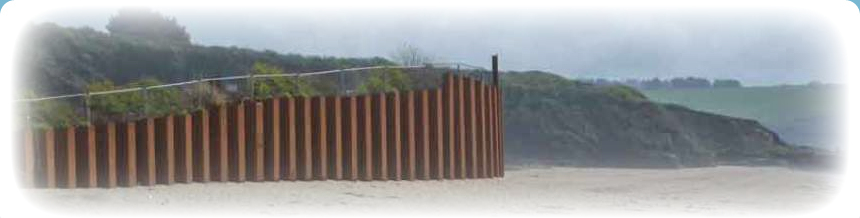
In 2002 development company Ampersand acquired the old Cornwall Coliseum and announced plans in the local press to develop the site into a huge leisure and holiday complex.
During a public meeting called to reassure concerned local residents, Mark Frazer, vice-chairman of a local residents’ association, challenged Ampersand to meet members of the community. The public relations advantages to the developer were clear and it was arranged that a Focus Group would be held. 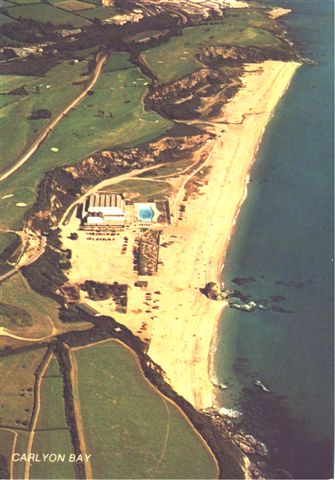
Several interested locals came forward but it was soon recognised that as well as regular meetings with Ampersand, they needed a separate forum to air the issues.
Carlyon Bay Watch (CBW) was formed as an umbrella group for the various residents' associations and to assess local feeling and to establish an informal mandate for action and support.
A petition was organised in the summer of 2003 after two additional revised planning applications were passed by Restormel Borough Council which detailed 511 apartments, a hotel complex, leisure and retail facilities, bars and restaurants.
The petition called for a public inquiry into the proposals and a total of 929 signatures were gathered (more than 800 of those from the Carlyon Bay area), a high proportion of local households.
As the implications of the development became clear, CBW hardened into a single issue pressure group committed to opposing the Ampersand project.
CBW wrote to all the organisations likely to be affected by or to have interest in the Beach development, such as statutory consultees, the local council, the Ombudsman, the Advertising Standards Authority, our local MP, local papers.
But the public face of the campaign was an attempt to try to draw wider attention to what was happening.
PRESS COVERAGE
The breakthrough came when we finally snagged the interest of the national media. In July 2003 a small group of us took a minibus to Plymouth to present the petition of 929 signatures to the Government Office of the South West (GOSW) calling for a public inquiry.
It attracted the attention of local and national press and broadcast media including The Guardian, Breakfast Television, Spotlight, BBC News and Radio 4.
We organised an Information and Awareness Day in November 2003, which was well attended. This entailed an exhibition of some of the information we had uncovered and a panel of local experts contributed to an open debate on the issues that evening.
LOCAL SUPPORT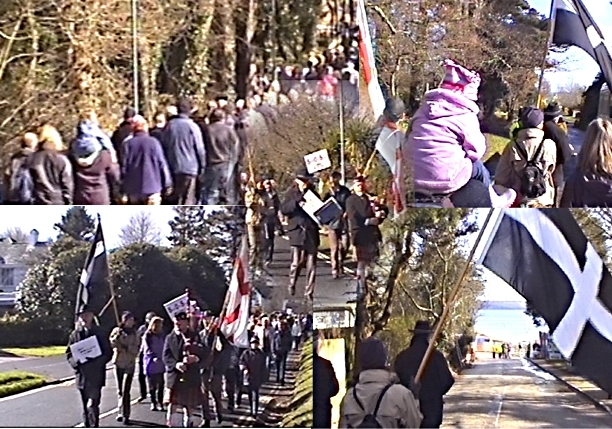
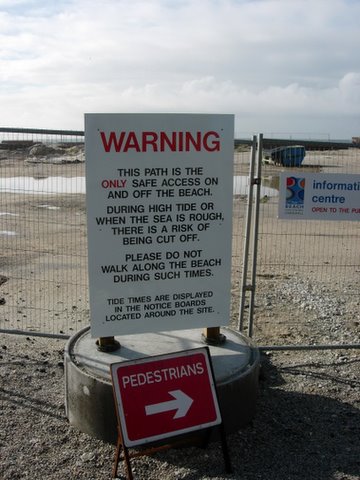
In January 2004, the developer closed the public access road to the beach so in February CBW organised a demonstration to exercise our right to access and convene on the beach.
We organised a piper and, in spite of the weather, had a rousing turnout of over 350 supporters and plenty of interest from the press.
In June 2004 Restormel Borough Councillors listened to nearly three hours of debate about the proposals for the revised sea wall and beach re-charge proposals at the Beach development. Those who spoke in favour of the proposals came from local hoteliers, tradespeople and investors who might fairly be thought to have some commercial interest in the outcome of the meeting. However, the prevailing mood was a huge groundswell of support for a Public Inquiry among the large number who attended.
On 30th October 2005 CBW held a second successful and well attended Information and Awareness day on the Beach plans, exploring topics such as ‘Flood Risk’, ‘Transport Impacts’ and ‘Local Ecology’.
There was a steady stream of visitors all afternoon and at 7:30pm the hall was packed for an audio visual presentation by CBW. Yet again, the CBW community mandate was confirmed by the attendance and the supportive tenor of the crowd.
We began experiencing success on four key fronts - pushing for a public inquiry, arguing for access, challenging the Ampersand public relations effort ( with our own steady stream of press releases ) and in monitoring, taking feedback and reporting back on the general impact of the development.
 PUBLIC INQUIRY
We encouraged everyone with interest in exploring the ramifications of the development plans to write to the office of the Deputy Prime Minister, John Prescott, then responsible for local development issues.
After initially saying that it was not needed, in August 2004 GOSW finally called a Public Inquiry. Although we have no confirmation of it, it felt as if all the attention and letters had affected this change of opinion.
The developer subsequently sidestepped the scrutiny of an inquiry by withdrawing the two add-on planning applications the inquiry was to investigate, but we still regard this as a success.
The background research members have put in has also been vital. One member tracked down a piece of legislation designed to protect areas like our beach and submitted an application to register part of Carlyon Bay Beach as a Village Green. CBW members helped collect the evidence statements and they amounted to 63% of the households in the catchment of the Village Green which is a first for an application of this kind. Owing to the care and thoroughness with which the case was prepared, it was decided that this too, merited a public inquiry. Unfortunately the case was deemed not made. This was a disappointment to very many local people and visitors who had contributed but we soon realised that the louder voice is the regional and national one. The wider issue is that of long term coastal management.
WEBSITE
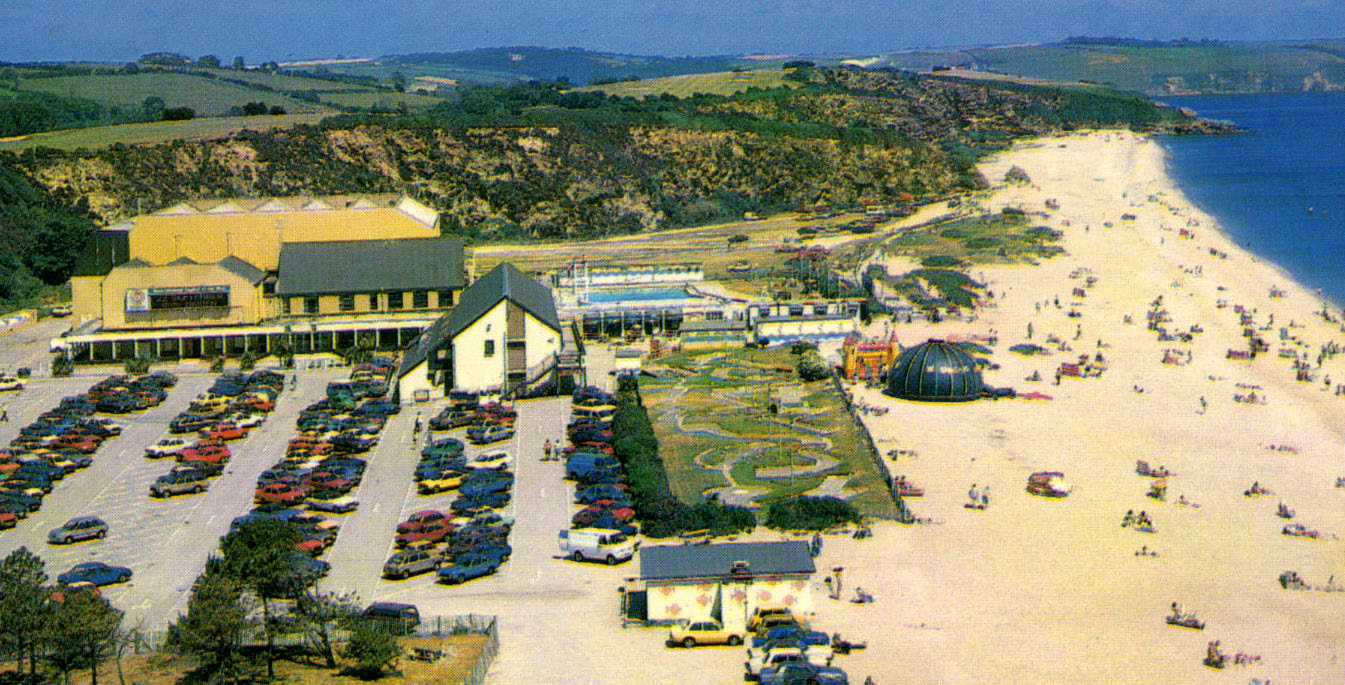 |
| As it was - the popular beach and leisure complex on Crinnis. Shorthorn and Polgaver beaches in the background were left undeveloped and supported a wealth of wildlife. |
We have to accept that a precedent has been set for building on the beach and we have said consistently that we would support a proportionate, environmentally-sensitive, safe and sustainable development restricted to the brownfield site on Crinnis, where the Coliseum complex grew out of the lido started in the 1930s.
Our website was originally launched in September 2003. We set out to make it factual in tone.
We have had support emails from all over UK and made contact with other environmentally motivated campaigns across the country. It also allows the media complete access to our point of view. We hope this means we are fairly represented.